Key Takeaways
- Advertising is a paid communication approach that helps businesses promote their products and build brand awareness.
- Search, display, native, video, and Connected TV (CTV) ads all have different purposes, target different audiences, and are purchased differently.
- Effective advertising means setting the right objectives, managing budgets, and measuring performance.
What is Advertising, and How Does it Work?
Advertising is a type of paid communication whereby firms market their goods, services, or ideas to a target audience. Advertising is used by companies to create brand awareness, generate leads, drive purchases, and keep customers engaged.
Advertising traditionally utilized conventional media forms like TV, radio, newspapers, magazines, and outdoor hoardings. These media continue to enable broader audience outreach, especially where there is a need to create brand awareness. However, digital advertising has increased the number of choices that advertisers can use, whereby they can target their audiences depending on intent, interest, location, and viewing habits.
Digital advertising also enables performance analysis and thus better spending control.
Types of Advertising and How They Work
Different types of advertising have different purposes. Understanding placement, buying models, and key performance indicators for each form of advertising will help marketers choose the appropriate media channels.
Type of Advertising | Placements | Buying Models | Purpose of Advertising | Important KPIs |
Search Advertising | Search engine results pages and other search-enabled platforms | CPC | Capture active search intent and generate conversions | Clicks, CTR, CPC, conversions, CPA |
Display Advertising | Websites, mobile applications, publishers’ inventories | CPM/CPC | Raise awareness and drive web traffic | Impressions, CTR, viewability, conversions |
Native Advertising | Sponsored content within publisher’s feeds and articles | CPM/CPC | Increase engagement using contextually relevant placements | CTR, engagement, conversions |
Video Advertising | In-stream/out-stream placements | CPM/CPCV | Raise awareness, convey the value of the product | Video completion rate, completed views, conversions |
Connected TV Advertising | Streaming applications, connected TV devices | CPM | Enhance reach across households and raise brand awareness | Reach, frequency, video completion rate, post-exposure visits |
Search advertising features ads that are triggered by search keywords. Search advertising works effectively when it is applied to the research phase of product or service searches.
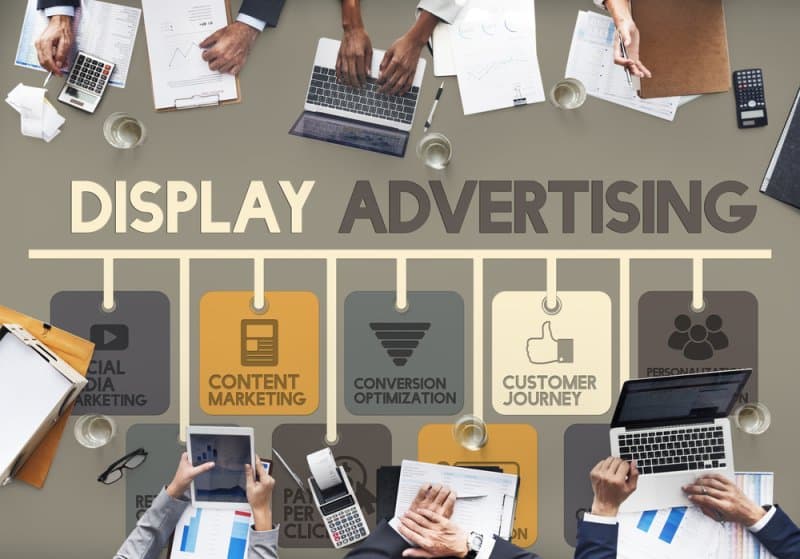
Display advertising features graphical ads such as banners and rich media ads on websites and applications. This form of advertising ensures that advertisements become visible beyond the search space.
Native advertising entails sponsorship of advertisements in a way that the ads match the style of the publisher's content. The presentation of the advertisements makes the ads appear similar to the other content.
Video advertising involves the use of both visual and audio elements to pass messages using in-stream and out-stream ad formats.
Connected TV (CTV) advertising entails the use of video advertisements on internet-connected TVs and apps.
Explore Advertising.com’s advertising solutions to understand how these channels can work together within a single campaign.
How Much Does Advertising Cost?
The cost of advertising depends on a number of considerations, such as the choice of media, the choice of target audience, the choice of market geographically, competition, time period, and payment method.
Popular methods of charging include:
- Cost Per Click (CPC): Charges are levied every time someone clicks on an ad.
- Cost Per Thousand Impressions (CPM): Charges are levied every time an ad is viewed 1,000 times.
- Cost Per Completed View (CPCV): Charges are levied every time the completion criteria for a video ad are met.
- Cost Per Install (CPI): Charges are levied every time an app is successfully installed.
Total cost will also be influenced by platform fees and management costs. On Advertising.com, advertisers pay for the media they purchase, with additional platform or management fees depending on their service model. Minimum spending requirements and billing terms are confirmed during account approval.
See Advertising.com pricing for details about available service models and billing options.
Advertising Industry Benchmarks
Industry benchmarks provide a useful reference for evaluating campaign performance and advertising costs. According to WordStream's 2026 Google Ads Benchmarks Report, the average search advertising metrics were:
- Click-Through Rate (CTR): 6.64%
- Cost Per Click (CPC): $5.42
- Conversion Rate: 8.18%
- Cost Per Lead (CPL): $66.69
Source and methodology: The WordStream report released in 2026 examined 13,474 United States-based search advertising campaigns operating between April 1, 2025, and March 31, 2026. All industries were subdivided into groups with at least 52 different active campaigns. These averages are median numbers since outliers should be considered, and all prices are in dollars.
These values serve as reference points and not guaranteed outcomes since they depend on industry, target audience, competition, campaign goals, and geographic location.
How to Plan and Measure an Advertising Campaign?
A good advertising campaign must have an objective, and it should start with what needs to be accomplished by the campaign. The following example illustrates how businesses can approach campaign planning.
Example: A retail brand introducing a new product
Note that the figures below are just illustrative and are not industry standards.
1. Define the objective: A retail brand is planning to promote its new product while making some sales online during the 30-day campaign.
2. Budget: Let us assume that the retail brand plans to use a total media budget of $10,000 for the campaign.
3. Allocation of spending across channels: The retail brand divides its budget allocation into different channels depending on its objectives.
- Search: $3,000 for active intent.
- Display: $2,000 for expansion and traffic.
- Native: $1,500 to reach the audience through relevant publishers.
- Video: $1,500 for communicating product benefits.
- CTV: $2,000 for greater household reach.
4. Measure campaign performance: The brand measures impressions, clicks, click-through rate, video completion rate, conversions, and cost per acquisition. Such data helps identify placements and channels that are more effective in meeting the goals of the campaign.
5. Optimize spending: When the search generates conversions with lower costs of acquisition, then the advertiser should think about increasing its budget spend on it, not forgetting to allocate enough budget to awareness channels.
Make Better Advertising Decisions With the Right Channel Mix
Advertising works most effectively when channel selection, audience relevance, budget, and measurement align with business objectives. Instead of having to think in terms of individual channels, advertisers can leverage the power of several channels at once to target various stages of the customer’s lifecycle.
Advertising.com integrates AI-driven search, contextual advertising, display, native, mobile, online video, and connected TV in one demand-side platform. Advertisers can manage budgets, targeting, and reporting across supported channels while using contextual intelligence to increase relevancy.
Whether you’re looking to drive awareness, consideration, or conversion, you’ll get better results with the right advertising strategy.
What to Do Next
Explore Advertising.com solutions or request access to get started.