Key Takeaways
- Programmatic advertising uses automated, rule-based software to buy ad space instead of manual email chains.
- There's more value to programmatic advertising than just real-time bidding and header bidding.
- If you're new to programmatic advertising or programmatic ad buying procedures, you must have aims.
- Faster response times and reports are just two that stand to benefit from programmatic advertising.
There was a time when buying ads meant endless email chains, manual insertion orders, and waiting weeks for placements to go live. Today, programmatic advertising has replaced most of that manual legwork by using software to buy and measure ads in milliseconds—a shift so widespread that industry data from eMarketer shows programmatic accounts for roughly 90% of all digital display ad spending.
For a small team, knowing what works and choosing the right platforms translates directly into real budget savings. This guide helps you see where your money goes, where it leaks, and what to do as you first approach the problem. In this blog, you will learn the programmatic ad buying process, the types of programmatic advertising, and examples of programmatic advertising you can borrow.
What is Programmatic Advertising?
Programmatic advertising is automated ad buying, where software judges each impression against your audience and budget rules. People write the rules, and machines apply them at a scale no media buyer could match.
Examples of Programmatic Advertising
Examples of programmatic advertising are easier to grasp with a hypothetical. Picture a regional furniture retailer using programmatic advertising to show sofa ads to nearby readers of home décor articles, then switching to a discount message for cart abandoners.
A streaming app might buy connected TV spots only where a launch is trending. Both examples of programmatic advertising show rules reacting to behavior.
How Programmatic Advertising Works?
How programmatic advertising works is easiest to see as a loop. A person opens a page, the publisher announces an open slot with anonymous audience signals, and buyers bid. The winning ad loads before the page finishes rendering.
Programmatic Ad Buying Process
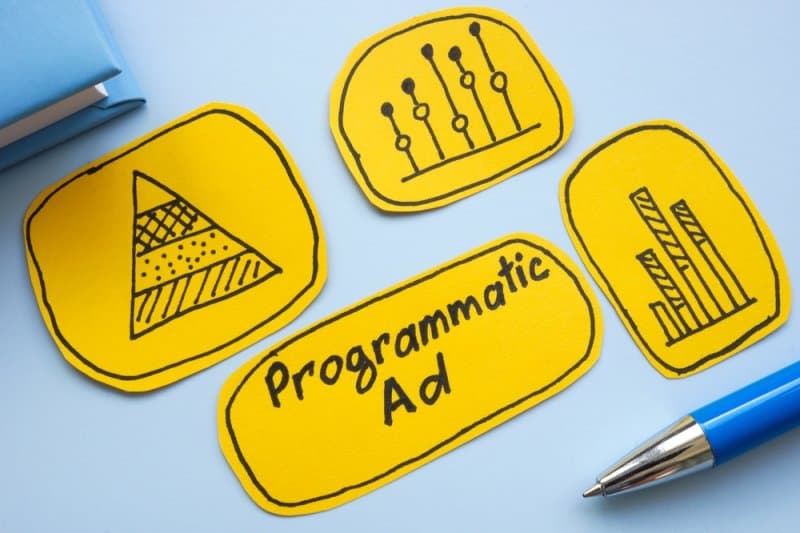
The programmatic ad buying process follows a sequence you can audit at every step. Skip one stage, and you pay for it later in wasted spend.
- Set a goal and cost target, like a $25 cost per lead.
- Build audiences from first-party lists, context, or both.
- Upload creative and set frequency caps.
- Review placement and conversion reports weekly.
Benefits of Programmatic Advertising
When paired with clear goals and clean tracking, the benefits of programmatic advertising go far beyond basic automation:
- Faster campaign optimization: Real-time performance feedback lets you shift budgets toward winning creatives and audiences immediately rather than waiting for post-campaign wrap-ups.
- Granular audience control: You can bid selectively based on specific user signals, context, geography, and device type instead of paying for broad, untargeted impressions.
- Transparent spend reporting: Detailed impression and conversion logs show exactly where each dollar went and which placements drove actual business results.
- Cross-channel reach: A single workflow lets you coordinate ads across display, video, audio, and connected TV without managing separate publisher contracts.
Types of Programmatic Advertising
The types of programmatic advertising differ in control and price certainty. Match the type to your need for scale or premium placement, as the examples of programmatic advertising below show.
- Open auction: Widest reach, widest quality range.
- Private marketplace: Invite-only inventory from vetted publishers.
- Preferred deals: Negotiated price, no guaranteed volume.
- Programmatic guaranteed: Negotiated price and fixed volume.
The Auction Layer Behind Every Impression
Understanding how programmatic advertising works means looking at where buyers and sellers meet. Two mechanics in programmatic advertising shape price and inventory quality.
Real-Time Bidding
Real-time bidding is the auction that decides which ad wins one impression. Bids arrive within a fraction of a second, and the highest eligible bid wins unless brand safety filters block it. Real-time bidding is why identical audiences can cost more at certain hours.
Header Bidding
Header bidding lets a publisher invite many demand sources at once before calling its ad server. Older waterfall setups offered impressions one buyer at a time, so a lower bid could win by going first. Header bidding usually lifts competition, though too many partners can slow pages.
Programmatic Advertising Platforms
Programmatic advertising platforms include buyer tools, publisher tools, and the exchanges linking them—an ecosystem that evolved from early ad networks like advertising.com into today's automated demand-side platforms.
This table compares well-known buyer-side options for programmatic advertising, so confirm current minimums first.
| Platform | Typically Suits | Worth Checking |
|---|---|---|
| Google Display & Video 360 | Teams deep in Google's ecosystem | Learning curve |
| The Trade Desk | Cross-channel buyers, including connected TV | Budget thresholds |
| Amazon DSP | Brands tied to shopper data | Fit outside retail |
| StackAdapt | Mid-size teams wanting guided setup | Niche inventory |
Programmatic Advertising Strategies
Programmatic advertising tools alone will not deliver results without clear guardrails. Solid programmatic advertising strategies keep spending disciplined while your account gathers performance data.
Start Narrow Before Scaling
Begin your programmatic advertising with one target audience, one core offer, and two creative variants. Expand your reach or add a private marketplace deal only after initial conversion data proves what works.
Maintain Active Placement Blocklists
Good programmatic advertising strategies rely on ongoing hygiene. Review your placement reports regularly and maintain a blocklist of low-quality or underperforming sites, trimming and updating it at least once a month.
Final Thoughts
When the world of advertising is driven by code, it's only natural that it is rewarded accordingly. Understand how programmatic can work and become familiar with real-time bidding and Header bidding, as well as choosing the right programmatic platforms for the size of your business. The single question an individual can ask is what does programmatic advertising hope to accomplish? The answer is a business objective, and that’s when you can measure one form of programmatic advertising against it.
Review some examples of programmatic advertising, see how programmatic advertising is performing in your reports, and review programmatic advertising strategies as evidence comes in. Be honest about the advantages of programmatic media; begin small and expand accordingly.
Frequently Asked Questions
What is the initial investment amount required for starting?
The minimums set by the programmatic ad platforms vary; be sure to check with others upfront. There is a kind of learning a small sum of dollars can provide.
What is ad fraud?
On programmatic, it means bot traffic and placements that are not clearly visible that burn budget. One type of programmatic advertising – a private marketplace – reduces risk.
Can you use programmatic advertising targeting without violating privacy law?
Yes, it does because real-time bidding uses a user signal; hence, consent rules are important. Rely on contextual data and first-party data.
What does success look like?
Evaluate programmatic advertising strategies by conversions and not clicks throughout the programmatic ad buying process. If possible, compare results to a holdout group.
What does ads.txt do?
It enables publishers to list authorized sellers of their inventory. It helps buyers to prevent unauthorized resellers, even in header bidding environments.