Key Takeaways
- Display advertising uses visual ads across websites, apps, and videos to reach audiences online.
- Effective brand awareness campaigns rely on broad reach and proper frequency caps.
- Giving each campaign one clear goal delivers better display advertising results.
Most people scroll right past banners without stopping. But even then, display ads still shape what people remember—or what they end up buying. Maybe people ignore banners, but display ads build familiarity. They give undecided shoppers a nudge and bring visitors back when they’ve left too soon. The problem is, too many campaigns just show ads to everyone, everywhere. It’s better to get clear about what your display ads should do—and how the whole thing works.
What gets better results? Sharper audience targeting, simple messaging, and always testing what you put out there. That’s what we’ll dig into here: the basic types of display ads, how targeting works, and a few real-life examples you can use.
What is Display Advertising?
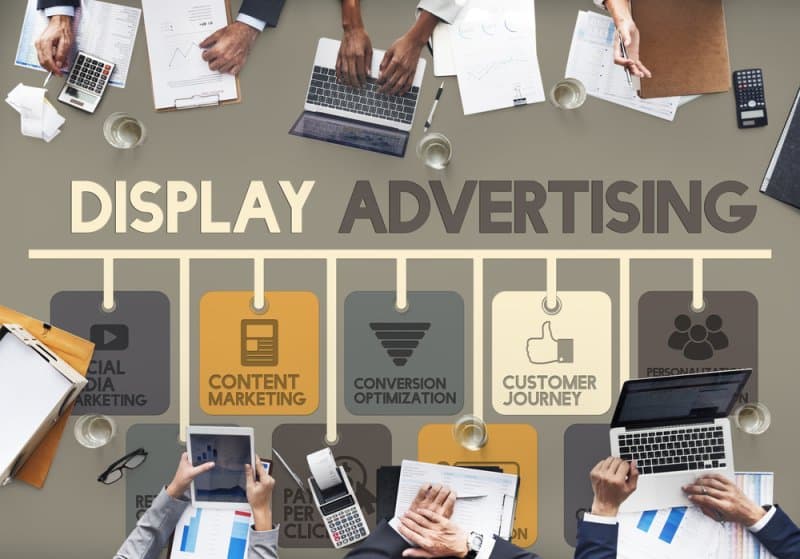
Display advertising is paid visual advertising, such as banners and responsive image ads, shown on websites, apps, and video placements. Unlike search ads, it reaches people while they do something else.
Because it appears while users are reading articles, browsing feeds, or watching videos, it relies on eye-catching visuals rather than active search queries. This makes it an effective way to introduce your brand early and stay visible throughout the buyer's journey.
Examples of Display Advertising

Examples of display advertising make the funnel concrete. Imagine a local bakery combining two types of display advertising, banners and native ads, in a $15 daily campaign with a fresh-bread photo to people within five miles, then retargeting visitors with a first-order coupon.
Both examples of display advertising pair a simple offer with a clear audience.
How Does Display Advertising Work?
How does display advertising work behind the scenes? You pick audiences, placements and a budget, and eligible impressions enter an auction as pages load. Tracking tags then record views, clicks, and conversions.
Types of Display Advertising
The types of display advertising vary by format and placement. Pick display advertising formats based on your message and the attention you can realistically earn.
- Standard banners: Fixed sizes like 300x250 and 728x90.
- Responsive ads: The platform assembles headlines and images to fit.
- Native ads: Styled to match surrounding content.
- Rich media and video: Moving formats for stronger recall.
Benefits of Display Advertising
The benefits of display advertising include visual storytelling, flexible budgets, and reaching people before they search. Display ads for brand awareness also support other channels, since people who saw a banner often search for the brand later.
Beyond initial discovery, display campaigns make it easy to retarget past visitors with tailored reminders that bring them back to finish a purchase.
You can also test multiple visuals and messages quickly to see which creatives resonate best with different audience segments. Together, these strengths help businesses stay top-of-mind across longer buying journeys without overspending.
Finding the Right People
Reach means little if the wrong people see the ad. Display advertising audience segmentation and display ad targeting strategies drive cost and relevance more than design tweaks.
Display Advertising Audience Segmentation
Display advertising audience segmentation divides people by behavior, interests, location, or past visits. Smaller segments let you tailor messages, so a first-time visitor and a cart abandoner never see the same ad.
Display Ad Targeting Strategies
Display ad targeting strategies range from broad interest groups to lists of past customers. Mixing two or three, informed by display advertising audience segmentation, usually beats relying on one, as the table shows.
| Approach | Who It Reaches | Best Judged By |
|---|---|---|
| Contextual | People reading related content | Engagement and reach |
| Prospecting | New people resembling buyers | Cost per new visitor |
| Retargeting | Past site visitors | Conversions and cost per sale |
Where Display Advertising Fits in Your Funnel?
Display rarely closes a sale alone. How does display advertising work in a funnel? It warms audiences, which is where the benefits of display advertising and the examples of display advertising below show up.
Display ads for brand awareness aim at memory, not clicks. Buy broad reach, cap how often one person sees the ad, and keep the logo obvious within the first second.
Making Display Advertising Work Harder
Setup is only half the job. Strong strategies of display advertising, display advertising best practices, and display advertising campaign optimization turn spending into learning.
Strategies of Display Advertising
Smart strategies of display advertising connect each campaign to one job. Run display advertising for awareness, prospecting, and retargeting separately—whether across major ad networks, retail media, or platforms like advertising.com—so budgets and reports stay clean.
Pairing each stage with tailored creative and realistic frequency caps also prevents ad fatigue while guiding prospects smoothly toward a conversion. Over time, separating these goals makes it much easier to see which audiences drive real revenue and where to scale your spend.
Display Advertising Campaign Optimization
Display advertising campaign optimization works best on a weekly rhythm. Compare placements, audiences, and creative against conversions, then change one variable at a time.
- Exclude sites and apps that bring clicks but no sales.
- Raise bids on segments that convert and lower the rest.
- Refresh creative when display advertising engagement drops.
Final Thoughts
If you want results, plan before you spend. Pin down what you want display ads to do, figure out how they work on your platform, and choose the right ad formats for your message. Use audience segmentation and targeting to stretch your budget further. And keep your branding campaigns separate from the ones focused on conversions.
Check out real examples, stick to proven strategies and best practices, and treat campaign optimization like a steady routine. If you want an easier way to manage it all, a unified DSP like advertising.com lets you run contextual targeting and manage campaigns across display, native, mobile, video, connected TV, and even AI search from one platform. Weigh the advantages clearly, keep refining your setup, and remember that small, consistent tweaks will always outlast a big, flashy overhaul.
Frequently Asked Questions
Which ad sizes do I need to create for display ads?
Start with 300x250, 728x90 and 160x600. The kinds of display adverts that you operate can incorporate video measurements.
What is viewability?
It determines if an ad had a level opportunity to be seen. In a display advertising campaign, low visibility may chip away at its optimization.
How many times do I need to view my ads?
There does not exist a fixed number. With brand awareness ads, start with a modest budget and aim to scale upwards accordingly to the display advertising strategies.
Would a landing page help?
Yes, a matching page better leads visitors to act on a promise—no matter what those display ad targeting efforts were. It also caters to display advertising best practices.
What is considered a good click rate?
But with display advertising, click rates are not necessarily high, and clicks don't lie. Later conversions are common results of benefits arising from display advertising.